Crypto Hack Mode in Blooket: The Full Player and Teacher Guide
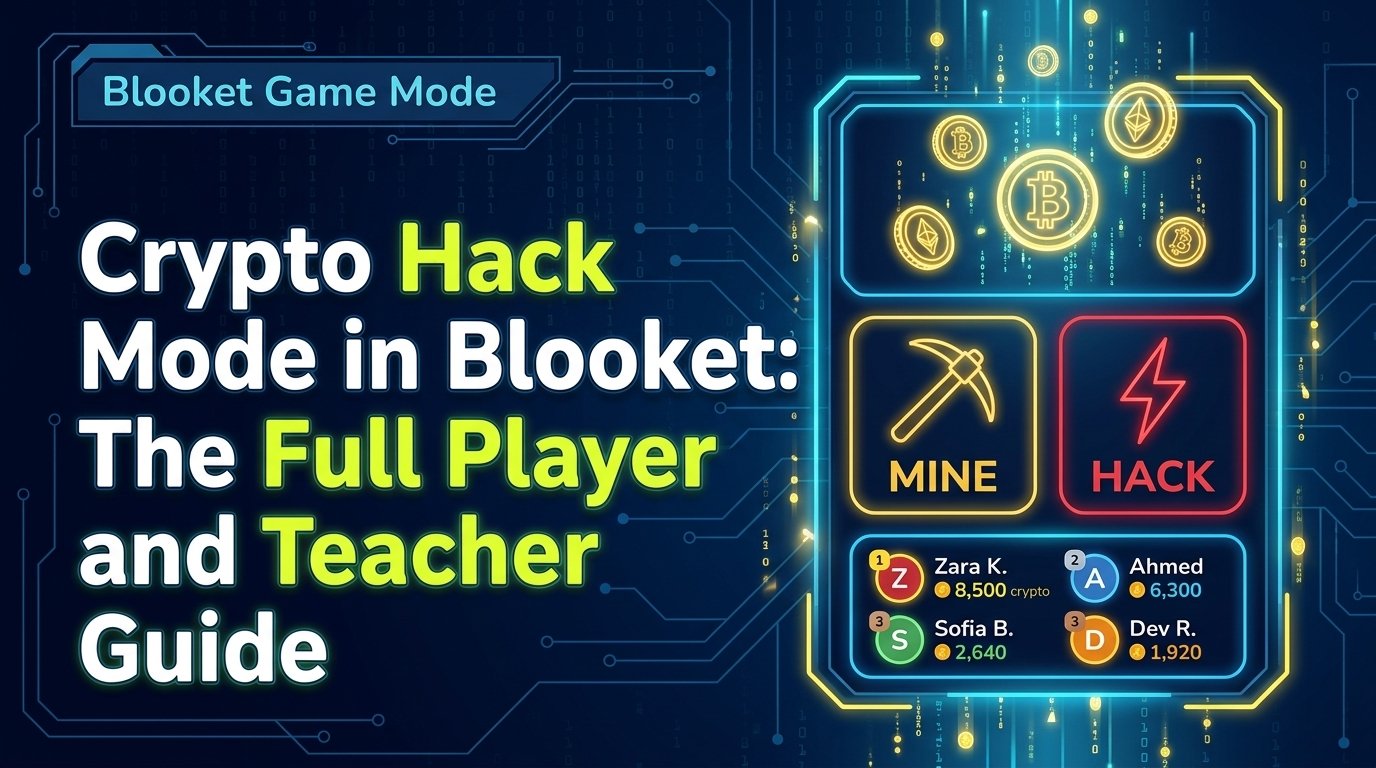
You answer a question correctly and two buttons pop up on screen. One says Mine. The other says Hack. Pick wrong and a classmate watches their balance drop while yours climbs, and the whole room suddenly cares a lot more about the next question than it did thirty seconds ago.
Crypto Hack mode in Blooket is exactly that decision, repeated over and over until the timer runs out. Players build a virtual coin balance by answering correctly, then choose between banking that coin safely or trying to steal a chunk of it from someone else on the leaderboard. Whoever is holding the most coin when time expires wins the game.
This guide breaks down how the mode actually plays, which decisions win consistently, the mistakes that quietly sink most players, and how a teacher can turn the format into a genuinely useful review activity rather than just a noisy fifteen minutes.
What Crypto Hack Mode Actually Is
Crypto Hack is one of Blooket’s live game modes built around a shared, visible leaderboard rather than separate individual scores. Every player answers the same question set, and every player can see everyone else’s current coin total throughout the entire match. That shared visibility is what makes Crypto Hack mode in Blooket feel more like a tactical standoff than a normal quiz.
Where the Format Comes From
The theme borrows its language from digital currency, with wallets, mining, and hacking standing in for straightforward point scoring. Students who already follow gaming culture or crypto headlines tend to pick up the framing instantly, which is part of why the mode holds attention longer than a plain trivia format.
What You Need to Run It
- Any existing Blooket question set works, no special content is required
- A free Blooket account is enough to host the mode
- Students join from a phone, tablet, or laptop using the normal game code
- Eight or more players makes the hacking mechanic meaningfully strategic
How the Mine or Hack Decision Works
Every round of Crypto Hack mode in Blooket follows the same loop, and once you have played through it once the rhythm becomes automatic.
The Turn Sequence
- A question appears and every player answers at the same time
- A correct answer unlocks a choice; a wrong answer earns nothing and moves on
- Choosing Mine adds a fixed coin amount straight into your own wallet
- Choosing Hack lets you pick a target from the live leaderboard and attempt to take a share of their coin
- A hack attempt can succeed or fail; a failure returns nothing for that turn
- The leaderboard updates instantly so the whole class sees every swing
Getting Hacked Is Not a Bad Sign
Losing coin to another player’s successful hack simply means your wallet was big enough to be worth targeting. Players near the top of the board get hit the most often for exactly that reason, so a sudden drop usually means you were winning, not losing.
Strategy That Actually Wins
Plenty of players understand the mine or hack choice and still finish near the bottom, because they apply the same instinct on every single turn instead of reading the board.
Build Before You Steal
Mine through the early questions while every wallet on the board is still small. A successful hack against a low balance returns very little, so the safer, steady payout from mining usually beats it during the opening stretch of any match.
Pick Targets by Balance, Not by Instinct
Once wallets start to separate, switch to watching the numbers directly. Attacking whichever player happens to be sitting next to you on screen wastes a turn if someone else on the board is holding triple the coin.
Let the Clock Decide Your Approach
In first place with the timer running low, mine and protect the lead. Outside the top spots with little time left, hacking the leader is the only move that can close a real gap before the round ends.
| Situation | Best move | Why it works |
| Opening minutes, wallets still small | Mine | A theft off a small wallet barely beats a guaranteed mine |
| Sitting in first place | Mine | Locking in steady income protects a lead better than a risky steal |
| Well behind with little time left | Hack the leader | Mining alone cannot close a large gap in the final minute |
| One player holds far more than everyone else | Hack | The payout per attempt scales with the target’s balance |
| Every wallet on the board is roughly even | Mine | No single target offers enough upside to justify the risk |
Mistakes That Cost Players the Win
Hacking Too Early
Attacking a small wallet in the opening minutes almost never beats the guaranteed payout from mining, yet it is the single most common mistake new players make.
- Fix: hold off on hacking until balances on the board have grown
Attacking the Wrong Target
Some players hack whoever is visible or nearby rather than checking who actually holds the most coin.
- Fix: scan the full leaderboard before choosing, then hack the largest balance available
Sticking to One Approach the Whole Game
A player who only mines or only hacks, no matter what the board shows, is giving up the exact flexibility that makes this mode winnable.
- Fix: reassess your approach every few turns as balances shift
Rushing Answers and Losing Accuracy
A wrong answer produces no decision at all, so speed without accuracy is pure lost opportunity.
- Fix: prioritize getting the answer right, then work on pace
Bringing This Format Into a US Classroom
Crypto Hack mode in Blooket tends to hold classroom attention longer than simpler formats because the leaderboard keeps shifting for the entire session, not just at the very end.
Question Sets That Fit Best
- Vocabulary and definitions with one clearly correct answer
- Math problems with a single numeric solution
- Historical dates, events, and figures
- Grammar and spelling rules
Session Length and Group Size
- Ten to fifteen minutes fits most class periods well
- Twenty to forty questions keeps the deck from repeating too soon
- Eight or more students makes the hacking dynamic genuinely strategic
Setting Expectations Before You Start
A short reminder before launching the game helps a lot: being hacked means a student was doing well, not that something went wrong. Framing it that way up front heads off frustration once the leaderboard starts moving.
Debrief After the Game
Because the pace moves quickly, students often answer without absorbing why a choice was right or wrong. Spending a few minutes afterward reviewing the questions most players missed turns the session from a fun distraction into an actual review tool.
Frequently Asked Questions
Is the mode free to use?
Yes. The mode is available on a free Blooket account, and it works with any existing question set without needing a paid plan.
Can a hack attempt fail?
Yes. A hack does not always succeed, and a failed attempt returns nothing for that turn, which is why relying on hacking alone is riskier than mixing it with steady mining.
How many players does the mode need to work well?
It can run with a small group, but eight or more players makes the leaderboard more competitive and gives target selection real strategic weight.
Is this mode appropriate for younger students?
Middle and high school students usually grasp the strategy quickly. Younger elementary students can still play and enjoy it, though they may choose more by instinct than by reading the leaderboard at first.
What is the best overall strategy?
Mine early while wallets are small, then shift toward targeted hacking once one or two players pull ahead, always checking the leaderboard before deciding rather than repeating the same choice every turn.
Final Thoughts
The correct answer is only step one in this format. What happens right after, mine or hack, is where the real competition lives, and it is what keeps a room of students glued to a shared leaderboard until the very last second.
Start by mining to build a base, track the board as balances grow, and switch to hacking only when the numbers make it worth the risk. Run a debrief afterward and Crypto Hack mode in Blooket turns from a loud, fast game into a review session students actually remember.