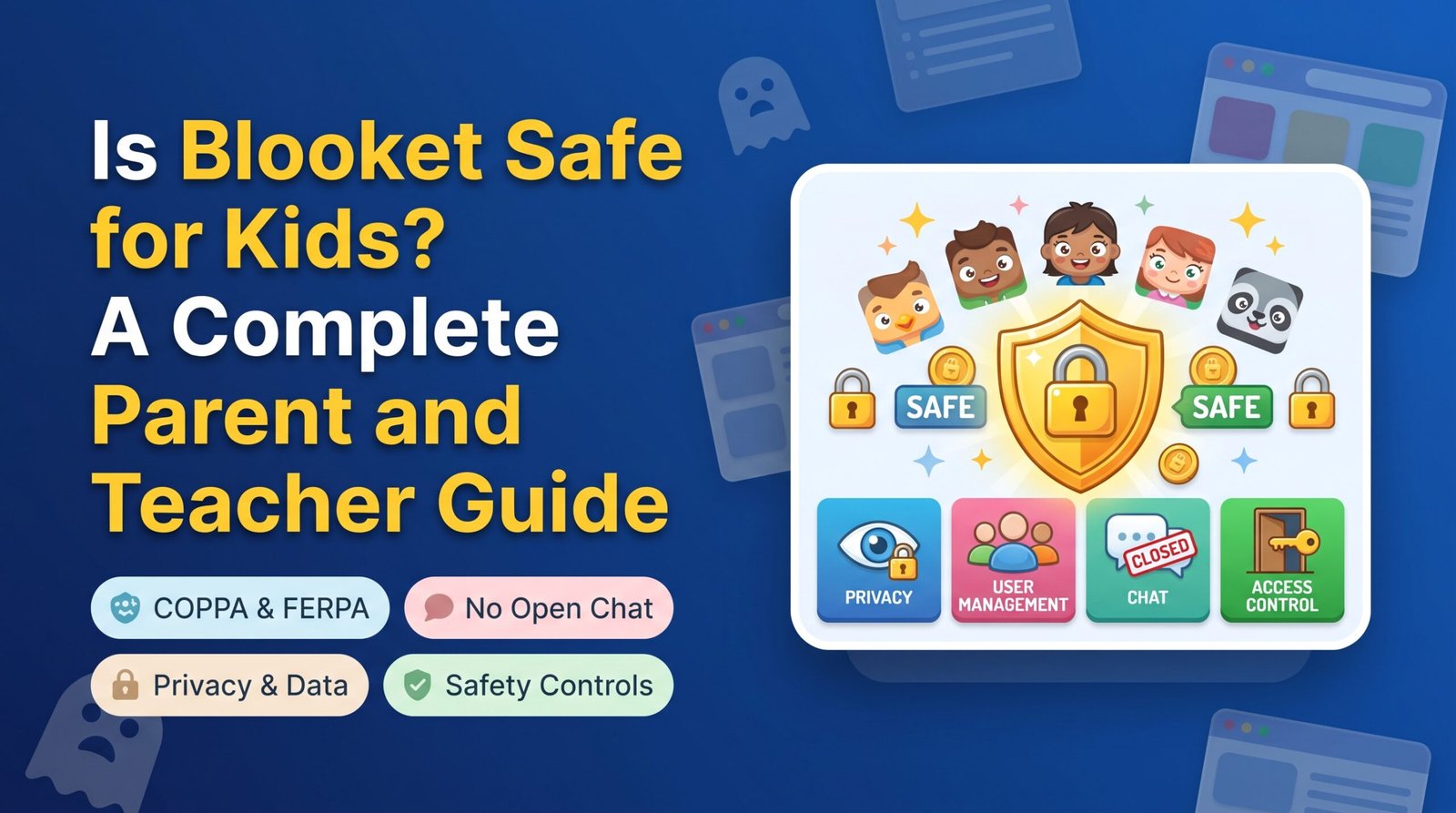
Is Blooket Safe for Kids? A Complete Parent and Teacher Guide
Is Blooket safe for kids? For most classrooms, the honest answer is yes, with normal supervision. Blooket collects very little information from students. It states that it stays ad free. Its policies are built around two federal laws written specifically to protect kids online.
This guide walks through exactly what data Blooket collects. It covers how the platform handles children under thirteen, and what the law actually requires. It also covers where the real risks sit, once you look past the headline question.
Is Blooket Safe for Kids: The Short Answer
Blooket is generally considered safe for supervised classroom use. Students can join a live game without creating any account at all. That means most kids interact with the platform while sharing almost no personal information. The bigger safety factors tend to come from how a class uses it, not from the platform itself.
What Data Blooket Actually Collects
How much information Blooket collects depends entirely on how a student is using it.
Playing as a Guest
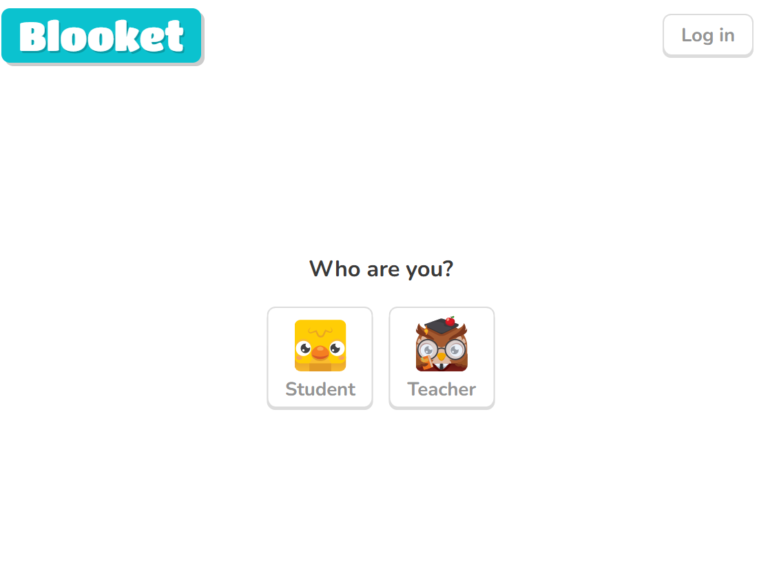
A student joining a live game only needs to enter a game code and pick a nickname. Blooket’s own privacy policy states that it collects the minimal amount of information necessary. For guest play, that usually means nothing beyond a temporary username for the session.
Creating an Account
Students who sign up for their own account, rather than just joining a game, provide a bit more. According to Blooket’s privacy policy, users above the required age provide a name, an email address, and a username. Nothing beyond that is required just to participate.
How COPPA Protects Kids Under 13
COPPA is a federal law. It stops websites from knowingly collecting personal information from children under thirteen without real, verifiable consent. Blooket’s own terms of service state this requirement directly. Its policy lays out how it handles accounts for younger children.
The School Consent Pathway
When a school uses Blooket in class, COPPA allows the school to give consent on behalf of parents. This falls under what is often called the school official exception. The school reviews Blooket’s policy and decides it fits their standards. That consent then covers enrolled students for classroom use.
The Direct Parental Consent Pathway
Outside of a school setting, Blooket states that children under thirteen may only become account holders with direct parental consent. This is the standard COPPA requires for any general audience platform that lets younger kids sign up on their own.
How FERPA Protects Student Records
FERPA is a separate federal law that protects student education records from being shared without permission. Blooket’s policy states that student personal information is only collected, used, and shared for purposes the school, teacher, or student has authorized. That lines up closely with what FERPA requires from any tool used inside a classroom.
| Law | What it covers |
| COPPA | Controls what a website can collect from a child under 13 without real parental consent. |
| FERPA | Protects student education records from being shared without permission. |
| GDPR | Sets data protection rules for users in Europe, cited in Blooket’s own policy. |
Is Blooket Ad Free
Yes. Blooket states that it remains an ad free service. Its privacy policy also says student data is not sold or used for targeted advertising. For a platform built mainly for kids, this matters more than it might for a general app. It removes one of the most common ways children get tracked online.
Where the Real Risks Actually Sit
Most of the genuine safety concerns around Blooket come from how it gets used. They come less from the platform’s own data practices.
Public Question Sets
Blooket has a public library where anyone can publish a question set. Content is not always reviewed line by line before it goes live. A teacher picking a public set sight unseen is taking a small risk on what students will actually see.
Third Party Hack Tools
Sites and extensions promising free coins or automatic wins are not connected to Blooket at all. Many carry hidden malware. Some ask for login details they have no real reason to need. This risk sits entirely outside Blooket itself. It is still one of the more common ways an account or a device actually gets compromised.
No Built In Time Limits
Blooket does not include a feature that caps how long a student can play. Left unsupervised, a quick review game can turn into a much longer session. This is more of a home use consideration than a classroom one.
Open Lobbies and Usernames
If a game code gets shared publicly instead of kept within a class, anyone with that code can join. That includes strangers. Encouraging students to use a real first name only helps close that gap. Keeping game codes within a known group helps too.
Tips for Parents and Teachers to Keep It Safe
- Stick to teacher hosted or parent hosted games rather than fully public lobbies.
- Review a public question set before assigning it, rather than trusting the title alone.
- Set a clear, simple nickname rule so results stay easy to read and students stay identifiable to the host.
- Talk to kids directly about avoiding any site or tool that promises free coins or guaranteed wins.
- For home use, set a normal screen time limit yourself, since the platform will not do it automatically.
Is Blooket Age Appropriate
Blooket works well across a wide age range, from elementary school through high school. A teacher controls the question content and the pace of the game either way. Younger students typically join through a teacher’s account rather than managing their own. That keeps the account side of things fully supervised.
How Blooket’s Safety Stacks Up Against Other Quiz Tools
Blooket is not alone in building its policies around COPPA and FERPA. Most major classroom quiz platforms, including Kahoot and Wayground, publish similar commitments, since any tool marketed to schools has to meet the same legal bar. What tends to vary more between platforms is the level of detail in the privacy policy itself, and how clearly a school can explain the setup to parents who ask.
For a parent comparing a few options, the practical difference often comes down to habits rather than policy. A platform with a strong privacy policy can still feel risky if a class uses public lobbies and unreviewed content. A platform with a good policy, used carefully, tends to be the safer pick in practice.
Frequently Asked Questions
Is Blooket safe for kids under 13?
Yes, when used through a school or with direct parental consent, both of which line up with what COPPA requires for children in that age group.
Does Blooket sell student data?
Blooket’s privacy policy states that it does not sell student data or use it for targeted advertising.
Do students need an account to play?
No. Students can join a live game with just a code and a nickname, without creating any account at all.
Is Blooket COPPA and FERPA compliant?
Blooket’s published policies specifically address both laws and outline how it handles data for students and younger children. Schools and parents should still review the current policy for their own specific use case.
What is the biggest real risk with Blooket?
Outside malware laced third party hack tools, the most common issue is a publicly shared game code. That can let in players who are not part of the intended class or group.
Final Thoughts
So, is Blooket safe for kids? Based on its own published policies, its ad free stance, and its handling of COPPA and FERPA, the platform itself is built with real safety guardrails in place. The remaining risk mostly comes down to how a class or a family actually uses it. That is exactly why a little supervision and a few simple habits go a long way.