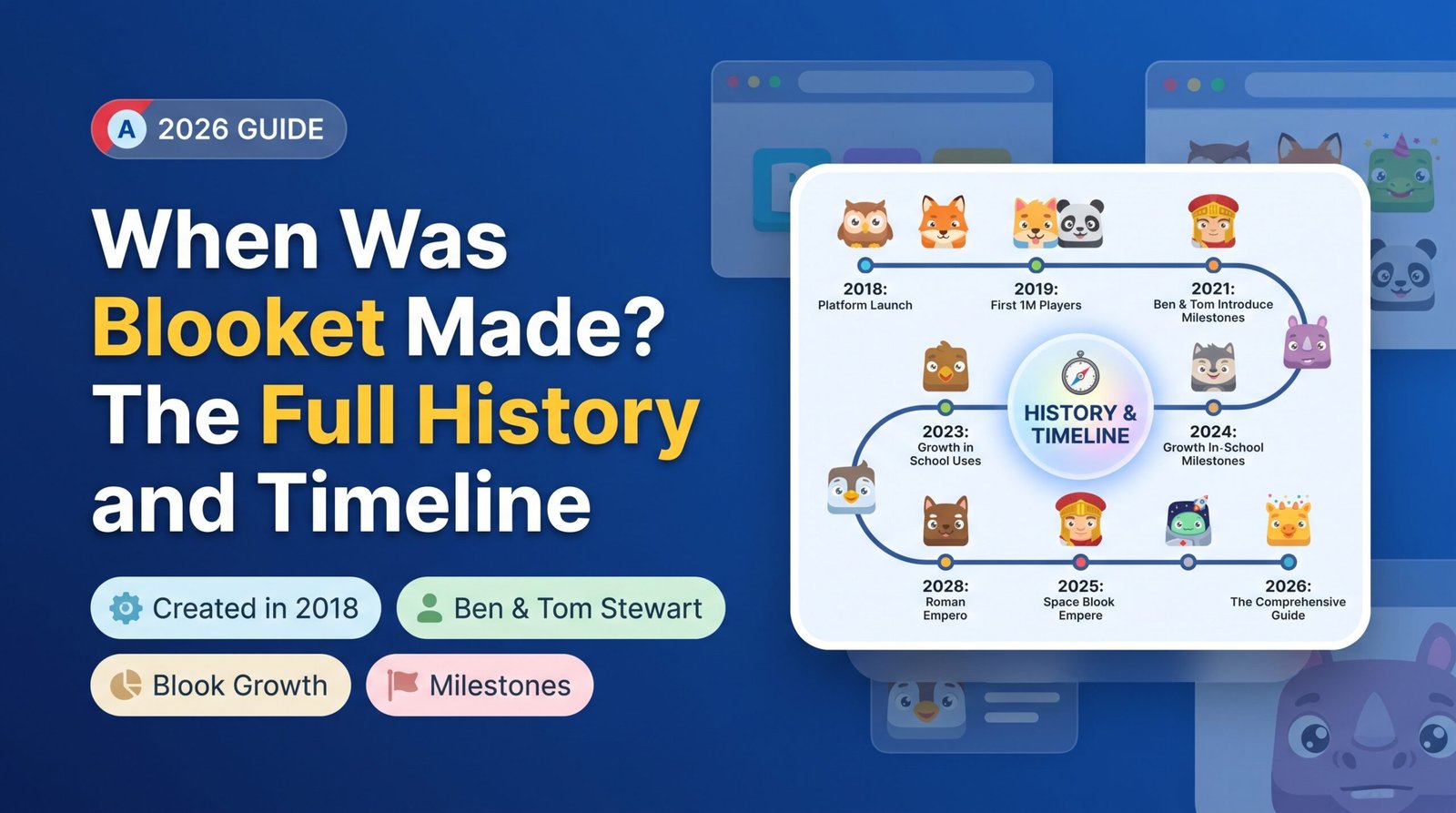
When Was Blooket Made? The Full History and Timeline
Sourcing Note: Blooket has not published an official founder biography. Public sources disagree on the exact founder, so that part is presented with appropriate caution rather than as settled fact.
When was Blooket made? The short answer is 2018. The platform most people know today did not show up until 2020, when it launched to the public. Those two years matter for different reasons. Mixing them up is where most of the confusion online comes from.
This guide lays out the full timeline. It covers the early build phase and the public launch. It also covers the growth years that followed, plus an honest note on the founder question, since public sources do not fully agree there.
When Was Blooket Made: The Short Answer
Blooket began as a small side project in 2018. Back then, it looked nothing like the platform used in classrooms today. It stayed mostly out of public view for about two years. A small group of teachers and students tested it quietly, before its full public launch in 2020.
Why Two Different Years Show Up Online
Some sources answer when was Blooket made with 2018. That is when the idea and the first version came together. Other sources point to 2020, the year it launched to the public and started growing fast. Both answers are correct. They are just answering slightly different questions.
The Full Timeline
Here is how the platform moved from an early idea to a tool used in classrooms across the country.
| Year | What happened |
| 2018 | Early development begins as a small, quiet side project rather than a public product. |
| 2019 | Testing continues in a small number of real classrooms, with teacher feedback shaping early features. |
| 2020 | Public launch. The timing lines up closely with schools shifting to remote and hybrid learning. |
| 2021 | Rapid growth in classroom use, with new game modes added at a steady pace. |
| 2022 to 2023 | Continued growth even as students returned to in person classrooms, with the platform adding more modes and seasonal events. |
| 2024 to 2026 | Steady expansion in game modes, question set tools, and monthly traffic, with millions of users worldwide. |
The Early Development Phase
Before Blooket had any public users, it was just a small project. It aimed to solve one clear problem. Standard classroom quiz tools tended to feel repetitive fast. The early version of Blooket paired trivia questions with simple, replayable game formats instead of one plain quiz screen.
During 2019, the idea moved from a personal project into something closer to a real product. A small number of classrooms tested early versions. Teacher feedback during that stretch shaped some of the game modes and design choices. Many of those choices carried into the public release.
The Public Launch in 2020
Blooket’s public launch landed at a moment few products get lucky enough to hit. Schools everywhere were suddenly searching for tools that worked for remote and hybrid learning. A game based review platform fit that need well. That timing helped the platform grow much faster than a typical new EdTech launch usually would.
Growth in the years right after launch came mostly from teachers sharing it with other teachers, not paid marketing. That pattern is common for tools that genuinely work well in a classroom. Word spreads fast inside school networks once something proves useful.
A Note on the Founder Story
This is the part of the Blooket history that gets murky. Some articles credit a single founder. Others describe two brothers building it together. A few older sources list a different set of names tied to the earliest version of the idea. Blooket itself, run as Blooket LLC, has not published an official founder story to settle the question.
Rather than repeat one claim as settled fact, here is the fair version. The platform grew out of a small, personal project. Someone wanted to make classroom review less repetitive. Real teacher input later refined it, before its 2020 launch. If Blooket ever publishes an official account, that would be the source to trust most.
How Blooket Has Grown Since Launch
Growth after 2020 was not one single spike. It looked more like a steady climb. There was a sharp early jump during the pandemic years. Growth kept going even after schools returned to in person classes.
- New game modes added on a regular basis since launch.
- A collectible Blook system introduced to keep replay value high.
- Seasonal events tied to holidays added over time.
- Continued growth in monthly traffic even years after the initial launch.
Why the Launch Timing Mattered So Much
A lot of EdTech tools launch and quietly fade. Blooket’s public arrival happened right as remote learning demand hit its highest point. That gave it a much bigger early audience than an ordinary year would have. That first wave of teachers stuck around once classrooms went back to normal. That is a big reason growth kept going instead of dropping off.
Frequently Asked Questions
So when was Blooket made exactly?
Development began in 2018. The platform most people recognize today launched publicly in 2020. Both dates are correct. It depends on whether the question means when it was first built, or when it became available to everyone.
Who created Blooket?
Public sources disagree on the exact founder. Blooket has not published an official story confirming one version. Treat any specific founder name you see online with some caution until an official source confirms it.
Why did Blooket launch when it did?
The 2020 public launch lined up with a major shift toward remote and hybrid learning. That gave the platform a large early audience of teachers looking for new tools.
Is Blooket still growing?
Yes. Traffic and classroom use have continued to grow years after the original launch, well past the initial pandemic era boost.
Was Blooket always free?
The platform has offered a free plan since its early days, with a paid tier added later for extra features. The free plan has remained generous enough that most classrooms never need to upgrade.
Final Thoughts
When was Blooket made comes down to two honest answers rather than one. It was built quietly in 2018, then introduced to the world in 2020 at exactly the right moment. The founder details may still be fuzzy across public sources. The timeline itself is well documented. It explains a lot about why the platform grew as fast as it did.