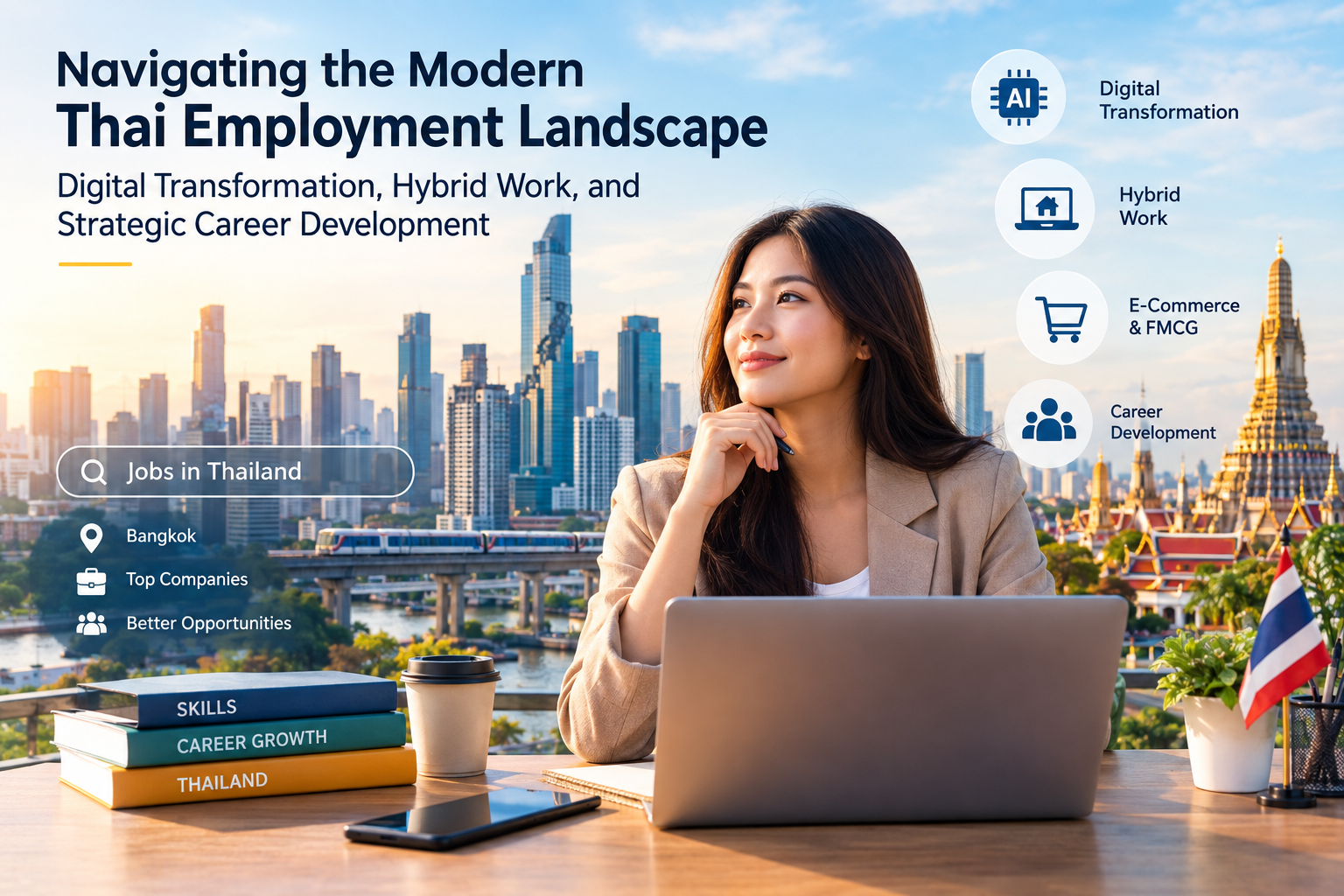
Navigating the Modern Thai Employment Landscape: Digital Transformation, Hybrid Work, and Strategic Career Development
The Asian labor market is undergoing a profound structural evolution driven by rapid digital transformation, changing workforce priorities, and the rise of flexible employment framework models. Nowhere is this shift more dynamic than in Southeast Asia’s second-largest economy, Thailand. As businesses across Southeast Asia embrace artificial intelligence, multi-channel e-commerce, and hybrid work cultures, job seekers and employers alike are navigating a rapidly shifting landscape. Understanding these macro-economic trends and leveraging modern recruitment platforms is essential for career success in this new era.
Key Drivers Reshaping the Thai Job Market
Several overarching factors are redefining how individuals look for employment and how companies source talent across Thailand.
1. Accelerated Digital Transformation and AI Integration
Traditional business models are rapidly giving way to tech-enabled operations. From multinational corporations in financial districts to regional enterprises, organizations are prioritizing roles that deliver measurable digital efficiency. Expertise in data analytics, cloud computing, artificial intelligence implementation, and digital marketing performance is no longer limited to the tech sector—it has become a foundational requirement across all major industries.
2. The Rise of Flexible and Hybrid Work Structures
The demand for flexible working environments has transitioned from a temporary luxury to a core talent retention metric. Both young professionals and mid-career executives are actively evaluating employers based on work-life balance, remote options, and flexible hours. Companies adopting modern, outcome-focused work models are finding it significantly easier to attract high-caliber talent compared to those sticking to traditional rigid schedules.
3. High Demand in E-Commerce, FMCG, and Hospitality
While tech roles lead in growth velocity, established pillars of the economy continue to demand specialized management talent. Fast-Moving Consumer Goods (FMCG), luxury retail, cross-border logistics, and hospitality are aggressively seeking leaders capable of navigating digital channels such as live-stream shopping, social commerce platforms, and omnichannel customer service.
4. Selective Hiring and Outcome-Driven Roles
Employers are adopting a more targeted approach to talent acquisition. Rather than expansive mass hiring, companies are focusing heavily on value-creating roles—positions that directly impact revenue growth, operational audit integrity, regulatory compliance, and brand positioning.
Industry Deep Dive: In-Demand Career Tracks
To remain competitive, job seekers must align their skills with industries demonstrating sustained hiring momentum.
| Industry Sector | High-Demand Positions | Essential Competencies & Technologies |
| Technology & IT | Software Engineers, AI Leads, Cybersecurity Analysts | Cloud Architecture, Python, Automation Frameworks, Data Science |
| E-Commerce & Marketing | Growth Marketers, TikTok/Shopee Coordinators, Brand Managers | Digital Media Buying, Influencer Management, Omnichannel Logistics |
| Corporate Services & Finance | Internal Auditors, Risk Managers, Executive Assistants | Regulatory Compliance, Financial Modeling, Cross-Cultural Communication |
| Retail & Consumer Goods | Business Development Managers, Boutique Store Leaders | Multi-Brand Operations, Strategic Account Management, Team Leadership |
Sourcing Opportunities in Key Regional Hubs
When exploring employment, location dynamics play a crucial role in shaping compensation and career trajectory.
Thailand’s capital city remains the primary engine of economic growth and career advancement in the region. As a regional hub for multinational headquarters, financial institutions, tech startups, and luxury retail conglomerates, the metropolis offers diverse employment opportunities across every sector. Candidates looking to explore top tier job opportunities can check job portals like Jobholic to streamline their search across diverse industries and leadership levels.
Whether searching for bilingual administrative roles, specialized engineering positions, or executive leadership, local job seekers frequently search for หางาน to connect with premier hiring managers. Given the sheer density of commercial enterprise in the capital, finding targeted listings in specific metropolitan districts is critical. Job seekers actively looking for localized roles in the central business district often utilize curated channels to find targeted openings by searching for หางานกรุงเทพ to connect with leading hiring teams.
Step-by-Step Guide to Landing Your Ideal Position
Navigating a competitive employment market requires a structured, proactive strategy. The following sequence provides a practical roadmap for securing your target role in today’s job market:
1. Self-Assessment & Skill Gap Analysis
Begin by evaluating your current technical abilities, language proficiencies, and software competencies against top-performing listings in your chosen field. Identify key technical or managerial gaps—such as digital marketing analytics or internal audit frameworks—and complete targeted certifications to enhance your resume.
2. Optimize Your Professional Persona
Modern corporate recruitment relies heavily on automated Applicant Tracking Systems (ATS) and algorithmic resume screening. Craft a clean, professional CV highlighting key industry metrics, multi-language capabilities (such as English or Mandarin fluency), and quantifiable career achievements.
3. Leverage Specialized Job Portals
Rather than relying solely on general networking boards, register on specialized job search platforms dedicated to Southeast Asian markets. Utilize specific filters for location, salary expectations, hybrid work options, and job categories to identify active openings matching your experience level.
4. Prepare for Multistage Interview Processes
Employers increasingly test for soft skills, problem-solving under pressure, and cross-cultural communication. Practice structured interview frameworks (such as the STAR method—Situation, Task, Action, Result) to demonstrate how your previous actions delivered concrete value to past organizations.
5. Negotiate Compensation and Hybrid Terms
Review current regional salary benchmarks prior to final interviews. When discussing contract details, look beyond base compensation to negotiate healthcare benefits, performance bonuses, professional development budgets, and remote work arrangements.
Future Career Outlook: Adapting for Long-Term Success
The employment landscape will continue to reward adaptability, technical fluency, and continuous learning. Professionals who proactively upskill in data literacy, modern management practices, and cross-border team coordination will find themselves well-positioned for sustainable long-term career growth. By leveraging comprehensive job portals, staying informed on industry salary benchmarks, and aligning career goals with high-growth sectors, candidates can confidently navigate the dynamic employment market and secure fulfilling opportunities.